Your annual leave entitlement in Singapore starts at a statutory minimum of 7 paid days in your first year of service. It rises by one day for each further year, up to 14 days. Your contract may give you more, but never less. In your first year, leave is pro-rated by the months you have completed.
What Is the Minimum Annual Leave Entitlement in Singapore?
The Employment Act sets the floor for paid annual leave. MOM applies it to most employees, including managers and executives, once they have served at least 3 months. Some groups, such as public officers, domestic workers and seafarers, fall outside the Act, so check MOM if you are unsure.
The minimum grows with each completed year of service with the same employer:
| Year of service | Minimum paid leave (days) |
|---|---|
| 1st year | 7 |
| 2nd year | 8 |
| 3rd year | 9 |
| 4th year | 10 |
| 5th year | 11 |
| 6th year | 12 |
| 7th year | 13 |
| 8th year onwards | 14 |
Your employment contract can offer more than this. Many employers give 14 days or more from day one. If the contract is more generous, the contract figure applies. If it offers less than the Act, the Act's minimum overrides it.
How Do You Calculate Your Annual Leave Entitlement?
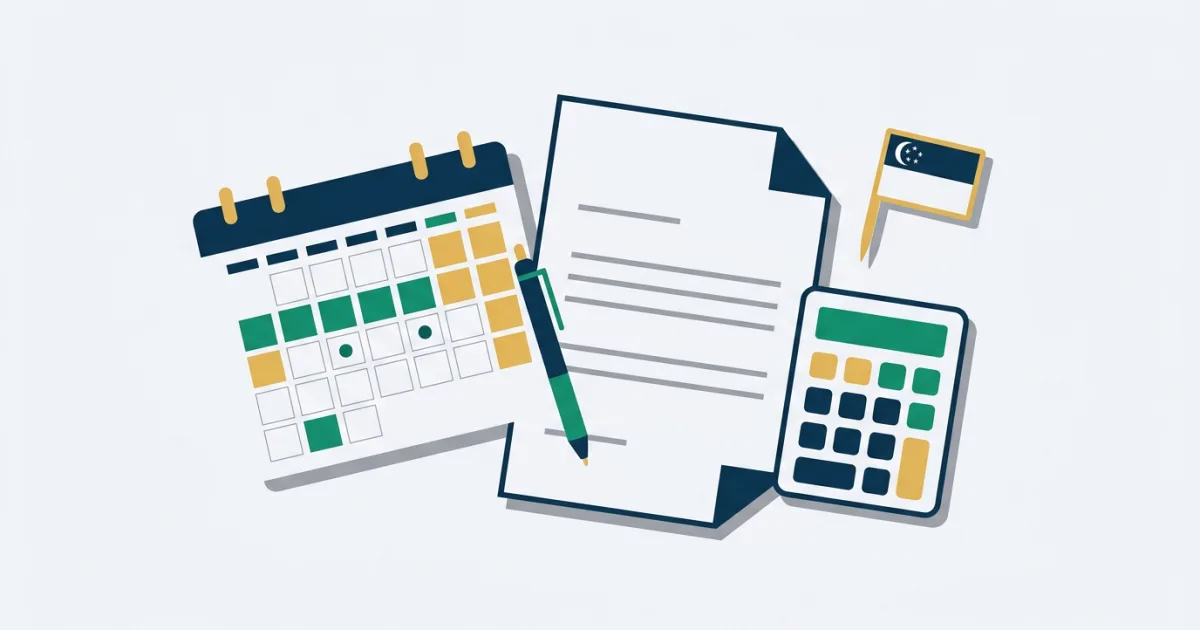
For a full year, take the number of days in your contract, or the statutory minimum for your year of service if that is higher. For your first year, pro-rate it: divide your completed months of service by 12, then multiply by your full-year entitlement.
Step-by-step: pro-rated leave
- Find your full-year entitlement from your contract or the table above.
- Count your completed months of service in the leave year. A part-month does not count.
- Divide the completed months by 12.
- Multiply the result by your full-year entitlement.
- Round any fraction of a day as your contract, company policy or MOM guidance says.
Example calculations
| Start date | Full-year leave | Completed months to 31 Dec | Pro-rated leave |
|---|---|---|---|
| 1 July | 7 days | 6 | 7 × 6 ÷ 12 = 3.5 days |
| 1 October | 14 days | 3 | 14 × 3 ÷ 12 = 3.5 days |
| 15 August | 7 days | 4 | 7 × 4 ÷ 12 ≈ 2.33 days, then rounded |
These examples assume a leave year that runs from January to December. If your company uses a different leave year or counts from your joining anniversary, count completed months from that date instead.
How Does the Annual Leave Calculator for Singapore Work?
The Annual Leave Calculator for Singapore does the pro-rating for you. You need two things: your start date and the number of leave days your contract gives you for a full year. If your contract is silent, use the statutory minimum for your year of service.
The result shows your pro-rated leave for the current leave year, based on the months you have completed. It also shows what a full year will look like once you have served long enough. Treat the figure as a guide and compare it with your contract. If your employer's rounding rule differs, your employer's written policy is what counts.
How Do You Request Annual Leave from Your Employer?
Check your employee handbook or HR portal first. Most companies have a set process, a notice period and a form or system for leave. Follow it, and keep a record of what you submit.
Give reasonable notice
Apply as early as you can, especially for long breaks or busy periods. Employers must balance everyone's requests against business needs. A request that arrives early, with clear dates, is easier to approve.
Email or formal letter
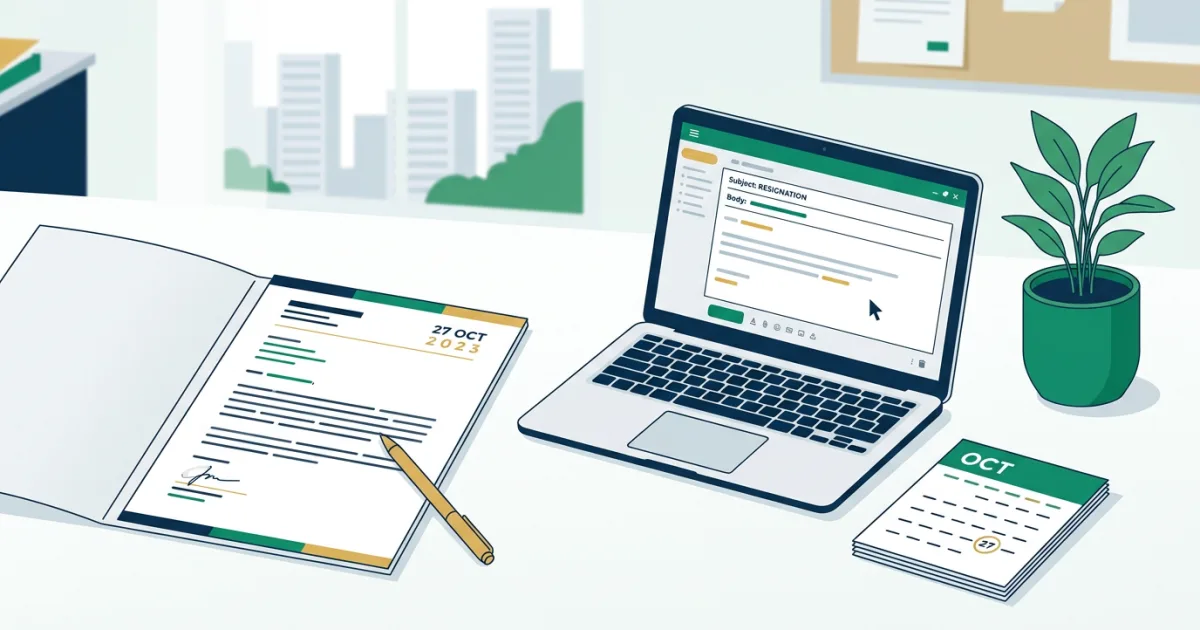
An email or HR-system request is enough in most workplaces. A formal letter suits companies that ask for written applications or for longer absences. If you want a ready format, see the Letter Requesting Annual Leave. State your dates, your leave balance and, if relevant, who will cover your work.
If your request is denied
- Ask which dates are a problem and why.
- Offer alternative dates in writing.
- Check your contract and handbook for how leave is scheduled.
- Keep a record of the exchange in case a dispute follows.
What Are the Key Rules for Taking Annual Leave in Singapore?
Employers generally decide when leave can be taken. They can refuse specific dates for business reasons, but they should not stop you from using the leave you have earned. Under the Employment Act, annual leave is meant to be taken within a set period after it is earned. Check the current MOM guidance for the exact period.
Carry-forward and expiry
Whether unused leave carries over depends on your contract or company policy. Some employers allow a limited carry-forward. Others let unused days lapse after the leave year. Find the rule in writing before the year ends, not after.
Is payment in lieu allowed?
Leave is meant for rest, so during employment it is expected to be taken, not cashed out. Whether your employer offers payment instead of leave depends on your contract and policy. When employment ends, unused leave is dealt with separately, as the next section explains.
Public holidays, sick leave and other leave
Public holidays and sick leave are separate entitlements. They should not be deducted from your annual leave. Check your contract and MOM guidance on how a public holiday that falls inside your leave period is treated. Other statutory leave, such as childcare or maternity leave, is also separate.
Leave and pay can interact with other rules too. If you work extra hours, see How to Calculate Overtime Pay in Singapore (MOM Rules).
What Happens to Your Leave in Common Situations?
When you resign or are terminated
If you have served at least 3 months, you are generally entitled to leave pro-rated for the completed months of the leave year. Unused days are usually paid out or used during your notice period, as your contract and policy provide. Agree the final figure in writing. For the exit process, see How to Write a Resignation Letter in Singapore. If your role is ending through redundancy, read Retrenchment in Singapore: Definition, Notice & Benefits.
During probation
Leave starts to accrue from your first day, but the statutory entitlement only applies once you have served 3 months. Some employers let you take leave earlier. Check your probation terms.
Under a use-it-or-lose-it policy
Such a policy is lawful if it respects the Act's minimum and is set out in your contract or handbook. Plan your leave early in the year. Ask HR to confirm in writing how many days will lapse and when.
If you dispute your entitlement
- Compare your contract, payslips and leave records with your calculation.
- Raise the difference with HR in writing and ask for their calculation.
- If it is not resolved, MOM's current guidance explains where to seek help.
Next step
Work out your own number first. Put your start date and contract leave days into the Annual Leave Calculator for Singapore, compare the result with your contract, then submit your request through your company's process.